
 21 Sep 2026
Small Gait Changes to Help Prevent Winter Slips, Falls, and Ice-Related Injuries
Small adjustments to how you walk, including shortening your stride, softening your knees, and placing your whole foot down evenly, can meaningfully reduce your risk of slipping on ice or snow. These micro-adjustments work by keeping your centre of mass more stable and giving your body more time to react when the ground surface changes.
BY: Laura Schneider
Physiotherapy
COMMENTS: No Comments
 24 Aug 2026
Sore After Physio? Why It Can Mean Your Muscles Are Waking Up
Mild to moderate soreness after physiotherapy exercises is common, especially in the first few appointments, and it often signals that underused muscles are being asked to work again. Soreness and pain are not the same thing; dull, achy muscle fatigue that eases over one to three days is generally a normal response to new movement
BY: Laura Schneider
Physiotherapy
COMMENTS: No Comments
 17 Aug 2026
Common Running Injuries in Edmonton: Is It Fatigue or an Injury?
Running pain that feels like general fatigue is sometimes an early sign of a developing injury, particularly when it keeps returning to the same spot, changes your stride, or lingers beyond a day or two of rest. Common running injuries such as runner’s knee, achilles tendinopathy, shin pain, plantar heel pain, and calf strains often
BY: Laura Schneider
Physiotherapy
COMMENTS: No Comments
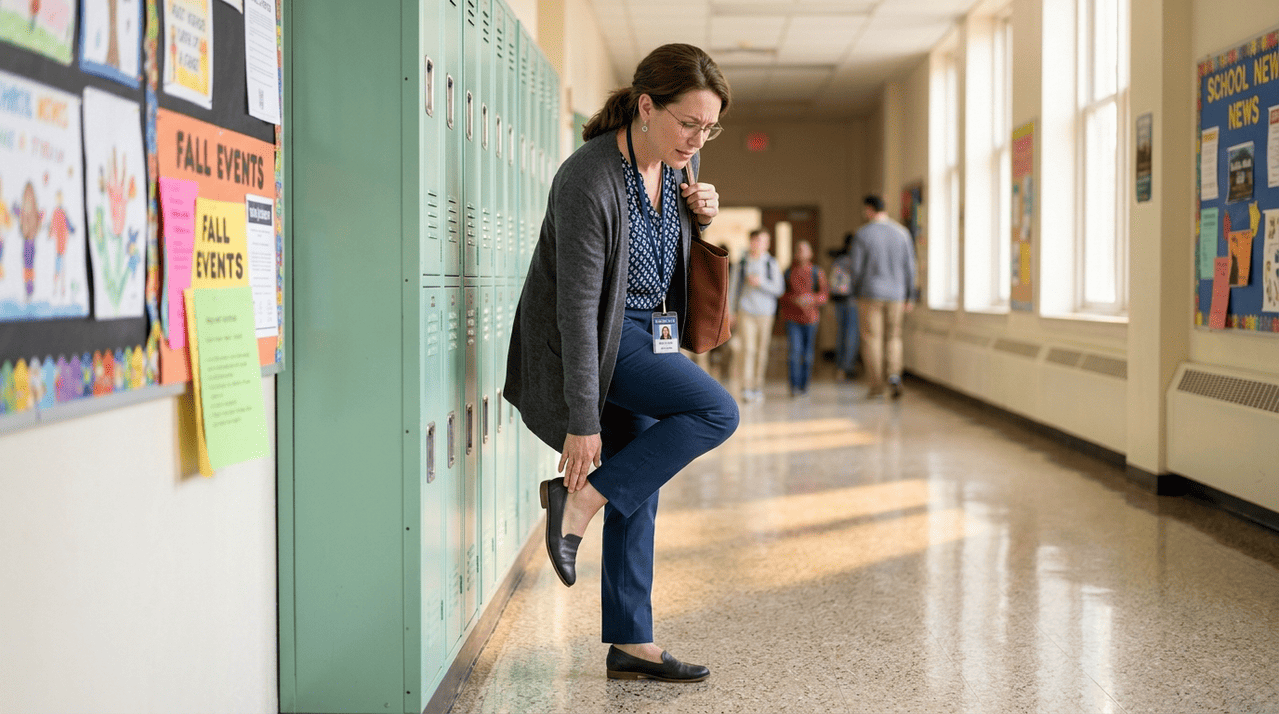 10 Aug 2026
Subtle Signs You May Need Custom Orthotics for Foot Pain and Long Teaching Days
TLDR If your feet ache by the end of the school day, your heels feel stiff in the morning, or your knees and lower back seem worse after long stretches of standing, your feet may be signaling that they need more support. Custom orthotics are individually shaped inserts designed to match your foot structure and
BY: Laura Schneider
Custom Orthotics
COMMENTS: No Comments
 29 Jun 2026
Why Wrist Stretches Alone Often Fall Short for Carpal Tunnel Relief: The Importance of Neck, Shoulder, and Nerve Mobility
TL;DR Wrist stretches target only the local compression site, but carpal tunnel symptoms often persist because the median nerve faces restrictions throughout its entire pathway from the neck to the fingertips. Addressing neck posture, shoulder tension, and nerve mobility along the full pathway provides more comprehensive relief than focusing solely on wrist-level interventions. ─────────────────────────────────────────── If
BY: Laura Schneider
Physiotherapy
COMMENTS: No Comments
 22 Jun 2026
Navigating Your First 90 Days at a Chronic Pain Management Clinic: What to Expect and How to Cope
TL;DR Your first 90 days at a chronic pain management clinic involve neurological recalibration where symptoms often fluctuate or temporarily worsen before stabilizing. Expect gradual functional improvements through physiotherapy, acupuncture, and kinesiology rather than quick fixes, with your nervous system slowly adapting to reduce pain sensitivity over time. ─────────────────────────────────────────────── Starting treatment at a chronic pain
BY: Laura Schneider
Physiotherapy
COMMENTS: No Comments
 15 Jun 2026
Mastering Micro-Movements: Daily Rituals to Support Joint Health and Mobility Amid Arthritis
TL;DR Micro-movements are small, intentional movements performed throughout your day that help maintain joint lubrication and reduce stiffness associated with arthritis. Simple daily rituals like gentle stretches, postural shifts, and low-impact exercises such as Tai Chi work alongside physiotherapy to support joint function. These consistent, small movements distribute mechanical load across your joints and promote
BY: Laura Schneider
Physiotherapy
COMMENTS: No Comments
 08 Jun 2026
Why Back Muscle Pain Can Feel Worse Before It Gets Better: Understanding the Non-Linear Healing Process
TL;DR Back muscle pain often increases before improving due to biological housekeeping – a natural process where dormant muscles awaken and old adhesions break down, causing temporary inflammation. This non-linear healing pattern signals active recovery, not treatment failure, and movement-based physiotherapy helps guide steady progress through these fluctuations. ──────────────────────────────────────────────── If you’ve been dealing with back
BY: Laura Schneider
Physiotherapy
COMMENTS: No Comments
 29 May 2026
Why Gentle Mobility is Better Than Aggressive Stretching in Early Frozen Shoulder Inflammation
TL;DR During early frozen shoulder inflammation, gentle pain-free mobility exercises support healing while aggressive stretching triggers protective muscle guarding and worsens inflammation. Your body’s pain signals exist to protect injured tissue, and respecting these limits prevents your shoulder from locking down further during recovery. ─────────────────────────────────────────── Understanding Frozen Shoulder and Its Inflammatory Phase Frozen shoulder, medically
BY: Laura Schneider
Physiotherapy
COMMENTS: No Comments
 22 May 2026
How Stiff Ribs, Restricted Neck, and Dormant Hips Can Lead to Shoulder Pain Explained
TL;DR Your persistent shoulder pain might stem from stiff ribs, restricted neck movement, or dormant hips forcing your shoulder to overcompensate through the kinetic chain. When these connected body parts lose mobility or strength, your shoulder joint works overtime to maintain function, leading to pain, tension, and overuse symptoms. Addressing whole-body movement patterns, not just
BY: Laura Schneider
Physiotherapy
COMMENTS: No Comments