
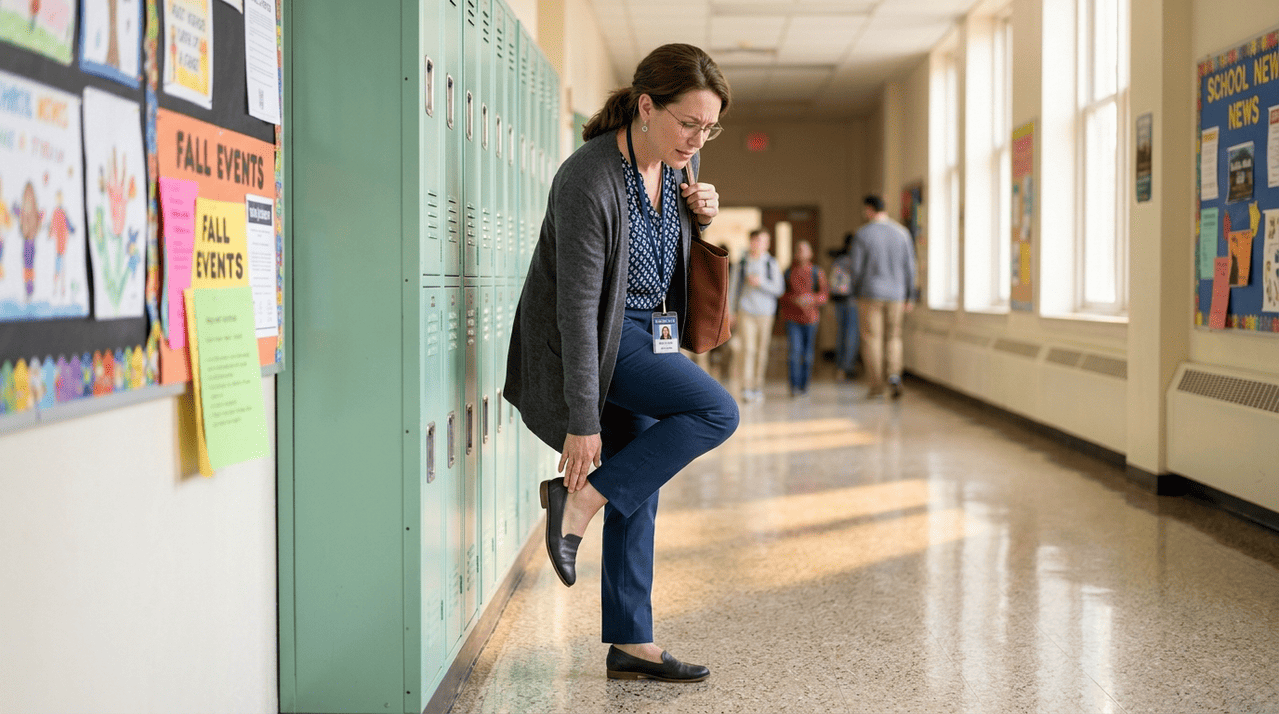
Subtle Signs You May Need Custom Orthotics for Foot Pain and Long Teaching Days
TLDR
If your feet ache by the end of the school day, your heels feel stiff in the morning, or your knees and lower back seem worse after long stretches of standing, your feet may be signaling that they need more support. Custom orthotics are individually shaped inserts designed to match your foot structure and movement pattern, and when paired with physiotherapy guidance, they help distribute pressure more evenly across your feet during demanding workdays. A physiotherapy assessment is the clearest way to find out whether custom orthotics are right for you. ───────────────────────────────────────────────Introduction
Teaching is a physically demanding profession. You spend hours standing at the board, circling the classroom, supervising hallways, and moving across hard school floors with very little time to sit. By the time the last bell rings, your feet have often carried you through six or more hours of near-continuous movement, and they know it. Foot discomfort does not always announce itself loudly. It shows up quietly at first: a tired ache in the arch, a heel that protests your first steps in the morning, or a lower back that feels worse than it should after a standard Tuesday. These are signals worth paying attention to, not pushing through indefinitely. This post walks you through the subtle signs your body sends when your feet need more support, how custom orthotics work, and why combining them with physiotherapy gives you a more complete approach to staying comfortable and mobile through the school year. There is also a note at the end about a 10% discount available to Edmonton public school teachers.Why Do Your Feet Matter So Much?
Your feet are the foundation for everything your body does while you are upright. They absorb impact, transfer load, and keep you balanced across hundreds of small movements every day. When their mechanics are slightly off, that stress does not stay in the foot. It travels upward through the ankles, knees, hips, and lower back. For teachers specifically, the physical demands compound quickly. Hard flooring offers little give. You move in short, quick bursts rather than sustained walks, which means your feet constantly adapt between standing still and shifting weight. Playground duty adds uneven terrain. Stairs add repeated impact. And footwear that felt fine two years ago may no longer match what your feet need now. According to the NIH NCBI Bookshelf, foot structure and biomechanics influence how load is distributed through the entire lower limb. Small alignment changes in the foot affect how the rest of the body compensates during movement. Discomfort is information, and it is worth understanding what your body is telling you before the signals get louder.What Are the Subtle Signs You May Benefit From Custom Orthotics?
The signs are often gradual, which is exactly why many teachers dismiss them until they become harder to ignore. Here are the ones worth watching for.End-of-Day Aching
Persistent aching in the arches, heels, balls of the feet, or ankles by the end of the school day is one of the most common early signals. It feels like normal tiredness at first. Over time, it starts arriving earlier in the day.Morning Heel Stiffness
If your first few steps out of bed feel tight, painful, or stiff in the heel, this is a pattern associated with plantar fasciitis, a condition involving inflammation of the thick tissue band running along the bottom of the foot. According to MedlinePlus, heel pain that is worst in the morning and eases with movement is one of the hallmark signs of plantar fasciitis. You can also learn more about how physiotherapy supports plantar fasciitis recovery.Foot Fatigue That Arrives Too Early
If your feet feel worn out by mid-morning in shoes that used to feel comfortable, your foot mechanics may have shifted. Footwear does not always change, but your feet do over time.Uneven Shoe Wear
Check the soles of your most-worn school shoes. If one heel wears down faster than the other, or one side of the sole thins more quickly, this reflects an asymmetry in how you load your feet. That asymmetry adds up over a full school day.Recurring Pressure Spots or Calluses
Calluses and pressure spots that return to the same locations are your foot’s way of flagging where it carries the most load. These are practical signs that weight distribution is uneven.Knee, Hip, or Lower Back Discomfort on Long Days
If your knees, hips, or lower back feel worse specifically after long periods of standing and walking, rather than after exercise or other activity, your foot mechanics are worth reviewing. The connection between foot alignment and discomfort higher up the body is well-documented, and addressing the foot often helps reduce the load on joints above it. For more on how foot mechanics connect to broader pain patterns, see our overview of physiotherapy for foot pain.A Sense That Your Feet Roll Inward or Lack Support
If you notice your arches collapsing or your feet rolling inward when you walk or stand for extended periods, this is called overpronation. It affects how load travels through the foot and up the leg, and it responds well to proper support when identified through assessment.How Do Custom Orthotics Support Teachers Who Stand All Day?
Custom orthotics are individually designed foot inserts shaped to match your specific foot structure, movement pattern, and loading demands. Unlike general cushioning insoles, they are built around a detailed picture of how your feet actually work. According to the HRSA, orthotics are designed to improve foot function, distribute pressure, and reduce discomfort during daily activity. For teachers, this translates directly into how custom orthotics help during long days of standing: by spreading load more evenly across the foot, reducing concentrated pressure on the heel or ball, and supporting the arch through repeated steps and pivots. Custom orthotics work most effectively when matched to the shoes you actually wear at school and incorporated into a broader plan that accounts for your movement habits, strength, and flexibility. They are support, not a standalone solution. If you are curious about what an appointment looks like, you can book a custom orthotics assessment here.Why Does Combining Custom Orthotics With Physiotherapy Matter?
Custom orthotics address what is happening under your foot. Physiotherapy addresses how your entire body moves. Together, they give you a more complete picture. A physiotherapy-based foot assessment typically includes a review of your symptom history, observation of how you walk, testing of range of motion and strength in the foot, ankle, and hip, a review of your footwear, and an assessment of balance and load patterns. This information shapes whether custom orthotics are appropriate, what type would suit your needs, and what exercises or movement adjustments would support your progress. Exercises targeting the feet, calves, hips, and core are often included when appropriate. These complement the mechanical support orthotics provide by building the strength and control your body needs to move with more comfort across a full school day. The aim is not just a thicker insert in your shoe. It is better movement confidence from the floor up.When Are Store-Bought Insoles Not Enough?
Over-the-counter insoles offer general cushioning and some arch support. For mild, temporary discomfort, they sometimes help. But they are built around a generic foot shape, not yours. There are situations where they are unlikely to fully address what is happening. These include one-sided pain, recurring pressure spots that return despite new footwear, discomfort that bounces back quickly after rest, or symptoms that have persisted for more than a few weeks without improvement.| Situation | Store-Bought Insole | Custom Orthotic |
|---|---|---|
| General cushioning for mild fatigue | Often sufficient | Not always necessary |
| One-sided pain or asymmetrical wear | Limited benefit | Designed around your specific pattern |
| Persistent heel or arch pain | Temporary relief at most | Addresses the underlying load distribution |
| Knee, hip, or back discomfort linked to foot mechanics | Unlikely to help | Worth assessing in a full evaluation |
| Recurring calluses or pressure spots | Does not change load pattern | Redistributes pressure to reduce concentration |
What Happens During a Custom Orthotics Assessment?
The assessment starts with a conversation about your symptoms, your work demands, and your footwear. From there, your physiotherapist reviews how your foot and ankle move, observes your walking pattern, and tests strength and flexibility in the foot, leg, and hip. If custom orthotics are recommended, measurements or a foot scan are taken to create inserts shaped to your foot structure and activity needs. The process is straightforward and focused on practical outcomes, not a generic template. A few things to keep in mind going into your appointment:- Bring the shoes you wear most often at school. The orthotics need to fit your actual footwear.
- Expect a gradual wear-in period. Most people build up to full-day use over one to two weeks to allow their feet and legs to adapt.
- Follow-up adjustments are normal. Small modifications after the initial wear-in period are part of getting the fit right.
Key Takeaways
- Foot discomfort that builds across a school day is a signal worth addressing, not normalizing. Early signs include arch aching, morning heel stiffness, and foot fatigue arriving sooner than expected.
- Uneven shoe wear, recurring calluses, and pressure spots in the same location indicate uneven load distribution across the foot.
- Knee, hip, and lower back discomfort that worsens after long standing periods often has a connection to foot mechanics.
- Custom orthotics are shaped to your foot structure and movement pattern, which makes them more targeted than general cushioning insoles for persistent or one-sided symptoms.
- Physiotherapy and custom orthotics address different parts of the same problem: orthotics support the foot structurally, while physiotherapy improves strength, mobility, and movement patterns.
- An assessment helps determine whether custom orthotics are the right fit for your specific symptoms, footwear, and daily demands before you invest in them.
Take the First Step Toward More Comfortable Teaching Days
If your feet are sending small signals during long days in the classroom, those signals are worth taking seriously before they start shaping your routine. You should not have to end every school day counting down to when you can sit down. At Boost Physiotherapy, we offer custom orthotics assessments that look at your foot mechanics, footwear, movement patterns, and workday demands to build a practical plan around your needs. Edmonton public school teachers also receive a 10% discount on custom orthotics, because the people who spend their days on their feet for others deserve proper support too. Book your assessment, bring your school shoes, and let us take a clear look at what your feet are telling you.Frequently Asked Questions
Do I need custom orthotics if my feet only hurt after work?
End-of-day foot pain is a useful sign that your feet are working harder than they should, and it is worth getting assessed rather than assuming it is just tiredness. A physiotherapy evaluation looks at whether footwear changes, strengthening exercises, custom orthotics, or a combination would address what you are experiencing. Not everyone who has post-work pain needs custom orthotics, but knowing the cause helps you make the right choice.Can custom orthotics help with knee, hip, or lower back discomfort?
They may help if foot mechanics are contributing to load stress further up the body. A physiotherapy assessment looks at how your feet, ankles, knees, hips, and back function together, rather than treating each area as separate. If your foot alignment is influencing how you load your knees or hips during standing, addressing the foot is a logical part of the broader plan.Should teachers wear custom orthotics all day from the start?
Most people build up wear time over one to two weeks rather than wearing orthotics all day immediately. The right schedule depends on your comfort, footwear, work demands, and how your body responds to the new support. Your physiotherapist will walk you through a realistic break-in plan so the transition is gradual and comfortable.BY: Laura Schneider
Custom Orthotics
COMMENTS: No Comments