
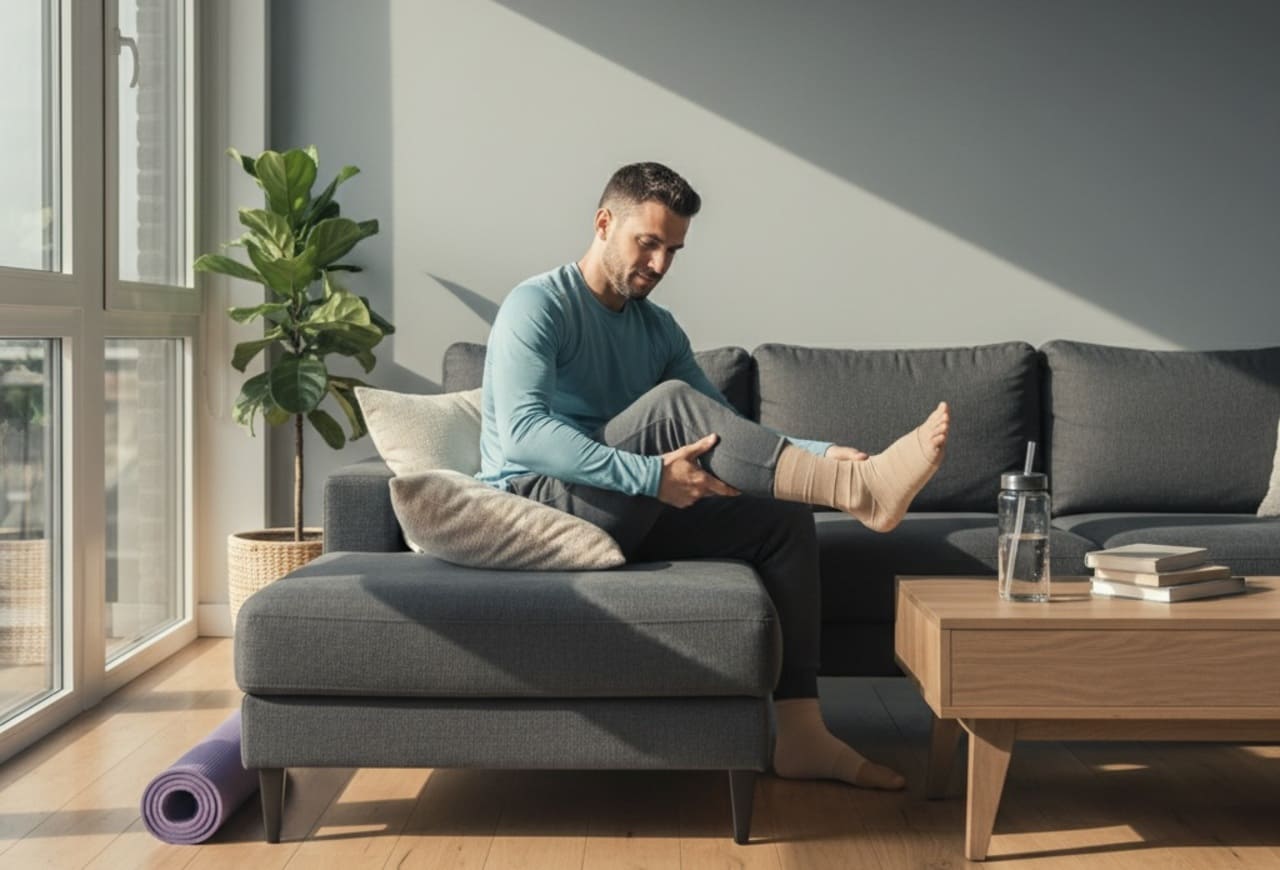
How to Optimize Your Home Care Routine Between Physiotherapy Sessions for Ankle Sprains
TL;DR
Effective home care for ankle sprains combines controlled weight-bearing, regular elevation, targeted exercises prescribed by your physiotherapist, and daily movement habits that support healing. Consistent home routines between physiotherapy sessions accelerate recovery and build confidence for your return to activity. ──────────────────────────────────────────────────────── Getting sidelined by an ankle sprain feels frustrating, especially when you’re eager to return to the activities you love. While your physiotherapy sessions provide expert guidance and hands-on treatment, what you do at home between appointments plays an equally important role in your recovery journey. Your home care routine becomes the foundation that supports everything your physiotherapist works to achieve during treatment sessions. When done correctly, these daily habits help reduce swelling, maintain mobility, and gradually rebuild the strength and stability your ankle needs. This guide provides practical, evidence-based strategies to optimize your recovery at home while staying aligned with your professional treatment plan.What Happens During an Ankle Sprain and Why Home Care Matters?
An ankle sprain occurs when the ligaments that stabilize your ankle joint stretch beyond their normal range or tear partially or completely. This injury triggers an inflammatory response that causes swelling, pain, and reduced mobility as your body begins the healing process. Recovery from ankle sprains happens in phases. The acute phase focuses on controlling inflammation and protecting the injured tissues. The rehabilitation phase gradually reintroduces movement and loading to restore function. Research shows that early, controlled mobilization and progressive loading lead to better outcomes than prolonged rest. Your home care routine fills the gaps between physiotherapy appointments. Consistent daily habits maintain the progress made during treatment sessions and prevent stiffness or weakness from developing. This approach ensures your recovery stays on track and builds momentum toward your goals.How Home Care Complements Professional Treatment
Professional physiotherapy provides assessment, manual therapy, and exercise prescription tailored to your specific injury and recovery stage. Your physiotherapist monitors your progress and adjusts treatment as your ankle heals. Home care extends this professional guidance into your daily routine. The exercises, movement patterns, and care strategies you practice at home reinforce what your physiotherapist teaches and help your body adapt to the gradual demands of recovery.How Should You Approach Weight-Bearing and Loading at Home?
Progressive loading means gradually increasing the weight and stress you place on your injured ankle as healing progresses. This controlled approach stimulates tissue repair while avoiding re-injury. Start with the weight-bearing guidelines your physiotherapist provides. These may range from non-weight-bearing with crutches to partial weight-bearing as tolerated. Clinical guidelines emphasize that appropriate loading promotes healing by encouraging proper tissue alignment and strength development.Guidelines for Safe Progressive Loading
| Recovery Stage | Weight-Bearing Approach | Key Indicators |
| Acute (0-72 hours) | Protected weight-bearing as tolerated | Minimal pain with gentle pressure |
| Early Recovery (3-7 days) | Gradual increase in walking tolerance | Reduced swelling, improved comfort |
| Progressive Phase (1-3 weeks) | Near-normal walking with support as needed | Stable joint, functional movement |
Using Supportive Devices Effectively
Braces, tape, or compression sleeves provide external support during the healing process. Use these devices as recommended by your physiotherapist, but remember they’re temporary aids. The goal is to gradually reduce dependence on external support as your ankle’s natural stability improves.What Are the Best Elevation and Swelling Management Techniques?
Elevation reduces swelling by using gravity to help fluid drain from your injured ankle back toward your heart. This simple technique becomes most effective when combined with rest and appropriate positioning. Elevate your ankle above the level of your heart whenever possible, especially during the first few days after injury. Use pillows to prop your leg up while lying down, or rest your foot on an ottoman when sitting. Aim to maintain elevation for 15-20 minutes several times throughout the day.Combining Elevation with Ice Therapy
Ice application helps control inflammation and provides pain relief. Apply ice for 10-15 minutes while your ankle is elevated, using a thin barrier like a towel between the ice and your skin. This combination maximizes the anti-inflammatory effects of both techniques. Create elevation opportunities throughout your daily routine. During work breaks, meal times, or while watching television, position your ankle appropriately. Consistency with elevation during the first week after injury significantly impacts how quickly swelling resolves.Which Daily Movement Habits Promote Healing and Confidence?
Gentle, regular movement maintains circulation and prevents stiffness from developing in your ankle joint. The key lies in finding the balance between appropriate activity and adequate rest for healing tissues. Studies demonstrate that controlled early mobilization improves functional outcomes and reduces the risk of chronic ankle instability. Start with simple ankle movements performed while sitting or lying down.Essential Daily Mobility Exercises
- Ankle circles: Slowly rotate your foot in both directions, 10 repetitions each way
- Alphabet writing: Use your toe to trace letters in the air, promoting movement in all directions
- Toe pointing and flexing: Alternate between pointing your toes away and pulling them toward your shin
- Gentle calf stretches: When tolerated, perform seated calf stretches holding for 15-30 seconds
Movement Patterns to Avoid
Certain movements put excessive stress on healing ligaments and should be avoided during early recovery. Avoid sudden direction changes, jumping, or activities that require quick stops and starts. Walking on uneven surfaces also challenges ankle stability before you’re ready.Why Are Prescribed Home Exercises Critical for Recovery?
Your physiotherapist prescribes specific exercises based on your injury severity, recovery stage, and individual needs. These targeted movements address particular deficits in strength, balance, or coordination that developed after your injury. Exercise prescription evolves throughout your recovery. Early exercises focus on maintaining range of motion and gentle strengthening. Later phases emphasize functional movements, balance training, and sport-specific activities that prepare you for return to your desired activities.Common Categories of Home Exercises
Strengthening exercises target the muscles that support your ankle joint. These may include resistance band exercises for the calf muscles, toe raises, or isometric exercises where you contract muscles without moving the joint. Balance and proprioception training helps restore your ankle’s ability to sense position and respond to changes in terrain. Simple exercises like single-leg standing progress to more challenging activities on unstable surfaces. Functional movement patterns prepare your ankle for real-world activities. These exercises mimic movements you need for walking, climbing stairs, or returning to sports.Keys to Exercise Success
Consistency matters more than intensity during home exercise routines. Performing exercises daily, even for short periods, produces better results than sporadic longer sessions. Start with the prescribed repetitions and sets, progressing only as recommended by your physiotherapist. Quality of movement takes priority over quantity. Focus on performing each exercise with proper form rather than rushing through repetitions. Poor technique reduces exercise effectiveness and may contribute to re-injury.How Do Lifestyle Factors Support Your Recovery?
Nutrition plays a supporting role in tissue healing and inflammation control. Adequate protein intake provides building blocks for tissue repair, while foods rich in omega-3 fatty acids may help manage inflammation naturally. Sleep quality affects your body’s ability to heal and recover. Aim for 7-9 hours of quality sleep nightly, and consider adjusting your sleep position to keep your ankle elevated during the acute phase of injury. Stress management supports overall healing. Chronic stress can interfere with the inflammatory response and slow recovery. Incorporate relaxation techniques, maintain social connections, and communicate openly with your healthcare team about concerns or setbacks.Key Takeaways
- Progressive loading under professional guidance stimulates proper healing while preventing re-injury
- Regular elevation above heart level for 15-20 minutes multiple times daily effectively reduces swelling
- Daily gentle movement exercises maintain circulation and prevent joint stiffness during recovery
- Prescribed home exercises from your physiotherapist target specific deficits and should be performed consistently
- Adequate sleep, proper nutrition, and stress management create optimal conditions for tissue healing
- Warning signs like sharp pain or increased swelling indicate the need to adjust activity levels and consult your physiotherapist
Ready to Optimize Your Ankle Sprain Recovery?
Your home care routine forms the foundation of successful ankle sprain recovery. By implementing these evidence-based strategies consistently, you support your physiotherapy treatment and build confidence in your ankle’s healing progress. Remember that recovery timelines vary based on injury severity and individual factors. Stay patient with the process, communicate regularly with your healthcare team, and trust that steady progress leads to lasting results. For expert guidance on ankle sprain recovery and personalized treatment plans, Boost Physiotherapy provides comprehensive care that gets you back to the activities you love. Our team works with you to develop effective home care routines that complement your in-clinic treatment.Frequently Asked Questions
How soon can I start bearing weight on my ankle after a sprain?
Weight-bearing typically begins immediately after injury as tolerated, using protective measures like braces or crutches when necessary. Your physiotherapist will provide specific guidelines based on your injury severity, but most people can begin partial weight-bearing within the first few days. Progress gradually and stop if you experience significant pain or increased swelling.What are the best home exercises to do between physiotherapy sessions?
The most effective home exercises are those specifically prescribed by your physiotherapist for your recovery stage. Common early exercises include ankle circles, alphabet writing with your toe, and gentle calf stretches. As you progress, balance exercises like single-leg standing and resistance band strengthening become important. Always follow your physiotherapist’s specific recommendations rather than generic exercise lists.How long should I keep elevating my ankle to reduce swelling?
Elevation remains most critical during the first week after injury when swelling peaks. Elevate your ankle above heart level for 15-20 minutes several times daily during this period. Continue elevation as needed if swelling persists beyond the first week, but the frequency can typically decrease as inflammation resolves. Your physiotherapist will guide you on when elevation is no longer necessary.BY: Laura Schneider
Physiotherapy
COMMENTS: No Comments